Spirit Intrusion or Shadow Possession?
In shamanic work, one of the most important questions we can ask when someone feels affected by an unfamiliar presence, energy or force is:
What are we actually encountering?
Is this an intrusion experienced as coming from outside the self?
Or are we encountering something within the psyche that has become so separated from conscious awareness that it appears to be entirely Other?
The distinction matters because what appears similar on the surface may have very different roots — and therefore may call for very different responses.
When the Shadow Becomes Other
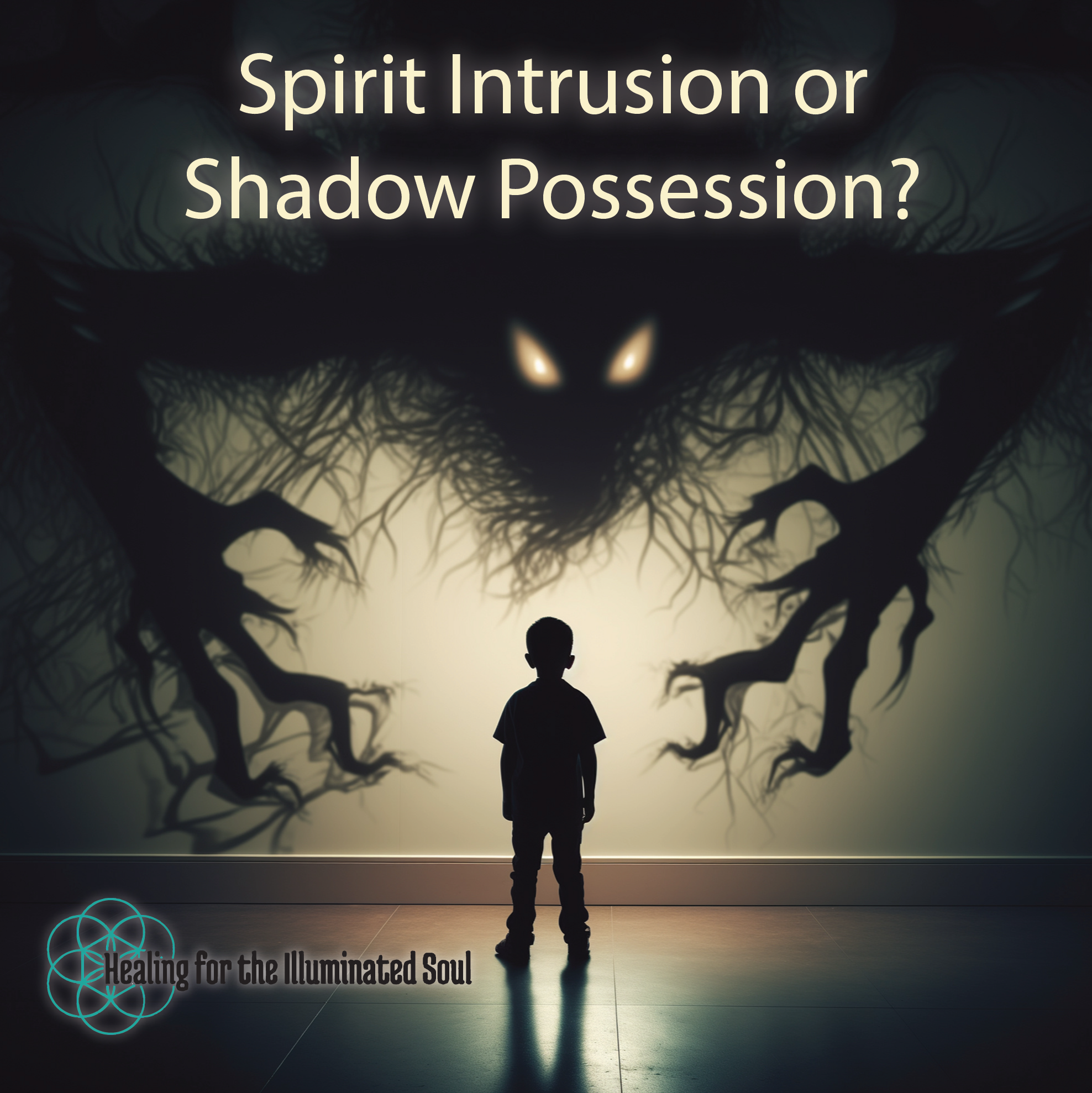
From a Jungian perspective, the shadow consists of aspects of ourselves that have been pushed outside conscious awareness — qualities, emotions, impulses, wounds, fears and experiences that the conscious ego is unwilling or unable to acknowledge.
But what has been pushed away does not simply disappear.
When disowned psychological material becomes sufficiently autonomous, it can begin to feel as though it belongs to someone — or something — else.
Jungian psychology describes how unconscious complexes can temporarily overwhelm or strongly influence the conscious personality, affecting our perceptions, emotions and behaviour.
Subjectively, this can sometimes feel like:
Something else has taken over.
And this is one of the places where psychological shadow and experiences interpreted as spirit intrusion can become confused
The Shamanic Understanding of Intrusion
Shamanic traditions offer another framework.
Across different traditions, practitioners may understand human beings as existing in relationship with a wider spiritual world — one that can include ancestors, helping spirits, initiating spirits and other non-physical presences or energies.
Within some shamanic frameworks, certain influences may be understood as disruptive or intrusive.
Practitioners working within those traditions have therefore developed methods for discerning what they believe is present, understanding its relationship to the person and, where appropriate, removing, releasing or disengaging from that influence.
But before deciding what something is, there is a more fundamental question.
What Is Self — and What Is Other?
What belongs to me?
What might not belong to me?
This is where discernment becomes so important.
If an aspect of our own shadow is interpreted entirely as a foreign entity, we risk externalising something that may actually be asking to be recognised, understood and integrated.
We may attempt to banish the very thing that needs our attention.
Rather than resolving the underlying fragmentation, we can potentially deepen it by reinforcing the belief:
This is not me. This has nothing to do with me. This must be removed.
Sometimes the more difficult question is:
What if some part of what I am encountering is mine?
What We Reject Does Not Disappear
In Jungian thought, what has been rejected by consciousness continues to find ways to make itself known.
Sometimes the shadow appears through projection — when we encounter qualities in another person that provoke an intensity far beyond what the situation seems to warrant.
Sometimes it emerges through repeating relationship patterns.
Sometimes through compulsions, addictions or destructive behaviours.
Sometimes through overwhelming emotional states.
And sometimes, subjectively, it can feel as though something entirely separate from us has taken control.
The experience may feel profoundly real regardless of the framework ultimately used to understand it.
This is why I place such importance on learning to discern Self from Other rather than immediately assuming we know what an experience means.
When Two Frameworks Meet
There may be experiences that a person understands as having a spiritual dimension.
There may also be experiences that can be understood psychologically — as an autonomous complex, trauma response, dissociated material or a disowned aspect of the psyche.
And sometimes we may need to hold more than one possibility while we continue to explore what is happening.
For me, discernment does not mean forcing an experience into whichever explanation we already believe.
It means remaining curious enough to ask:
What else could this be?
What am I bringing to this experience?
What is being revealed?
What belongs to me?
What appears to be Other?
And how do I know the difference?
Discernment also includes recognising when an experience may need medical or psychological support. Feeling taken over, hearing voices, losing time or no longer feeling like yourself can have medical or psychological causes, particularly when they bring intense distress or changes in how you think and sleep. If that sounds like what you are experiencing, please speak with your GP or a mental health professional first. Spiritual exploration can sit alongside that care.
The Shadow Is Not Simply Darkness
The shadow has sometimes been described metaphorically as the Dark Twin or Lower Self because it can carry qualities that the conscious ego would rather not identify with.
But the shadow is not simply evil.
And it is not something that needs to be eradicated.
Hidden alongside our wounds, fears, shame and destructive tendencies can be tremendous psychological energy.
Instinct.
Creativity.
Vitality.
Power.
Desire.
Gifts we were taught were unacceptable.
Parts of ourselves we abandoned because, at some point in our lives, it felt safer not to be them.
The shadow can therefore contain not only what we fear about ourselves, but also what we have not yet learned how to own.
Integration, Not Eradication
This changes the nature of the work.
The task is not simply to destroy the shadow.
The task is to bring what has been unconscious into relationship with consciousness.
To recognise it.
To understand it.
To take responsibility for what is ours.
To integrate what can be integrated.
And, within a spiritual framework, to discern carefully what we experience as genuinely Other rather than assuming that everything unfamiliar must come from outside ourselves.
That distinction requires humility because discernment begins with accepting that our first interpretation may not always be the right one.
The Alchemical Work of Becoming Whole
For me, this is where shamanic work and depth psychology can meet in a powerful way.
Both can ask us to enter the places we would rather avoid.
To turn toward what frightens us.
To become curious about what has been hidden.
And to develop enough awareness to distinguish between what needs to be released and what needs to be reclaimed.
Because sometimes healing requires letting something go.
And sometimes healing requires recognising that the thing we have been trying desperately to escape is actually a part of ourselves waiting to come home.
That is part of the alchemical work of becoming more whole.
Next Step
If you are trying to make sense of an experience that feels like it is not your own, Kristy can help you explore what is present with care and discernment. Read more about shadow work, explore Shamanic Healing, or book a session with Kristy.